Reimagining music discovery with AI.
ChainTunes
ROLE: Product Designer, end to end (strategy, UX, UI, prototyping)
OVERVIEW
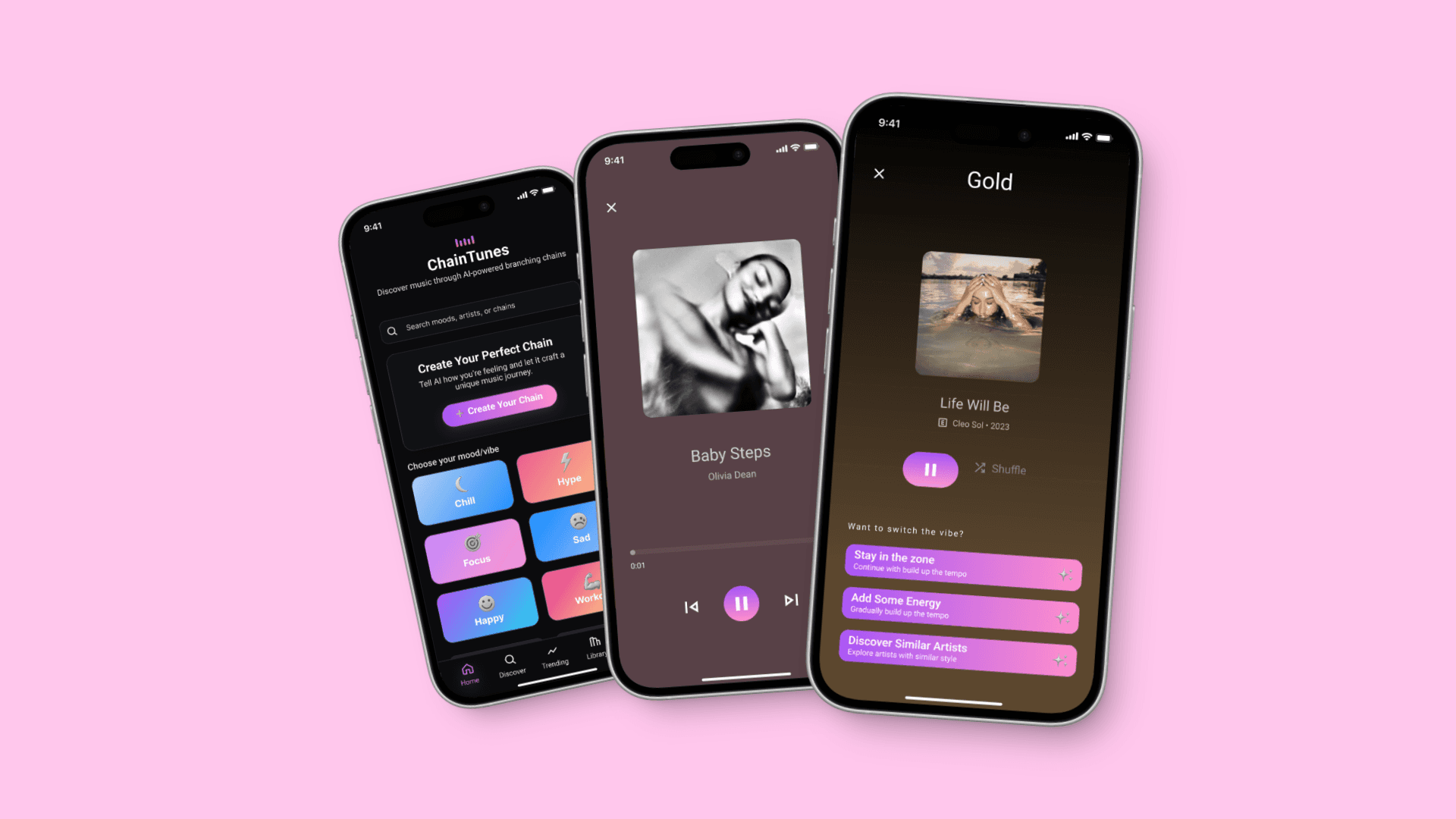
ChainTunes is an AI-powered iOS music discovery concept that turns passive listening into an interactive experience through branching “chains” and explainable recommendations.
SCOPE
UX strategy
User research
AI-assisted ideation
Design system
UX and UI design
Prototyping
Pitch deck design
PRODUCT
Home
Discovery
Trending
Playback
Library
Profile
Chain builder flow
TIMELINE
2 Months
TOOLS
Figma
Lovable
ChatGPT
Claude
Notion
Code V0
PROBLEM
Music discovery today is repetitive and opaque. Users want fresh recommendations but still want control over what plays next and why.
SOLUTION
Designed a mood-first discovery model where users guide the listening journey in real time through branching choices, shifting discovery from passive algorithm-driven listening to an intentional, user-guided flow supported by clear AI reasoning.
PRODUCT VISION
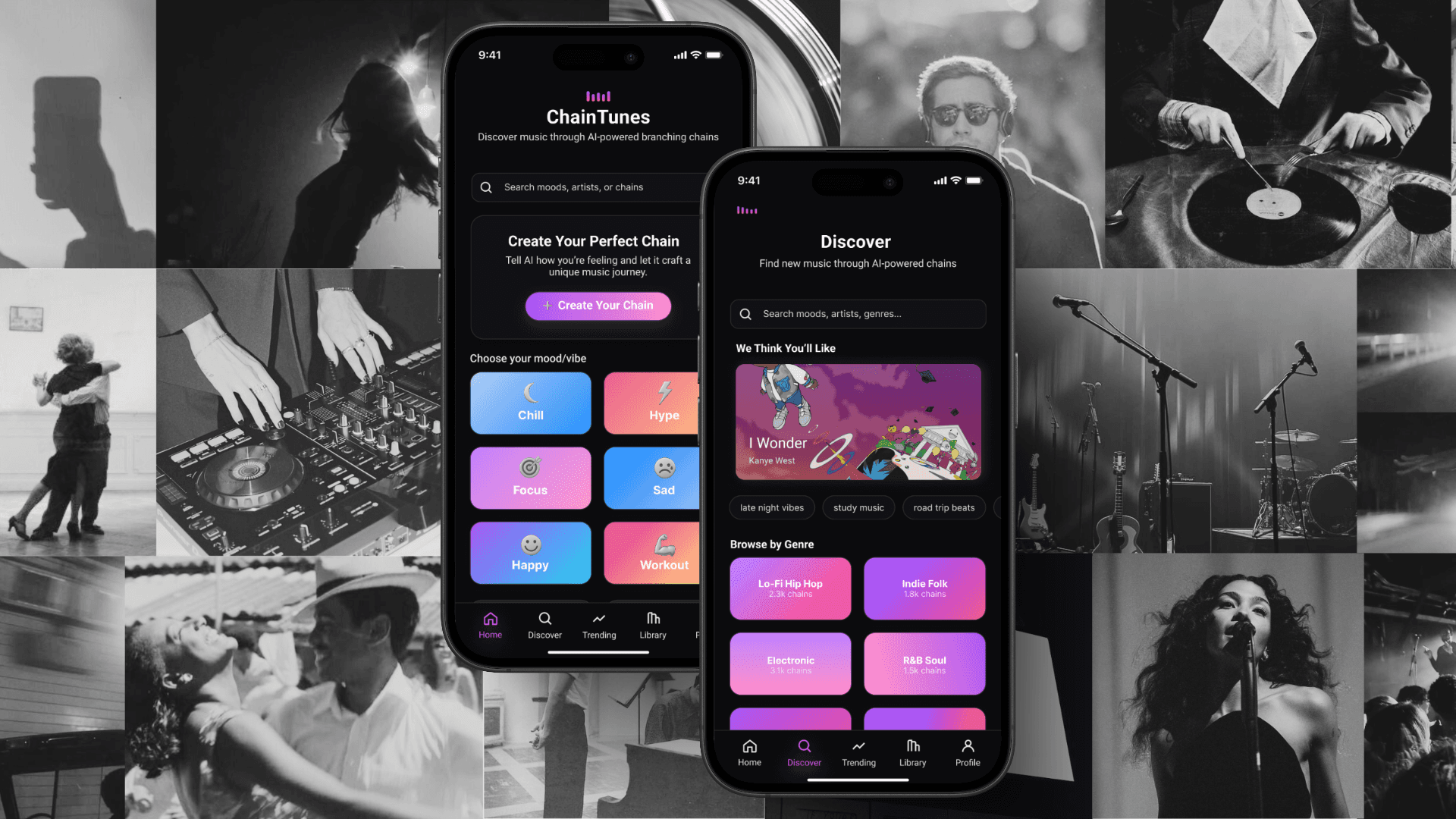
ChainTunes reframes music discovery as an interactive journey, where listeners guide what plays next through branching choices instead of passive playlists.
DIFFERENTIATION
Branching discovery instead of linear playlists
User choice introduced at key moments, not constantly
Transparent AI reasoning that builds trust
DISCOVERY
I surveyed 20 participants aged 20–30 to understand current discovery habits and frustrations. Key themes included repetitive recommendations and difficulty finding new artists. While some felt partial control, all participants expressed interest in actively shaping their music path, reinforcing the need for a more interactive and transparent discovery experience.

Key Insights
Listeners want novelty without losing control over what plays next
Too many choices during playback increase hesitation
Understanding why a song is recommended builds trust
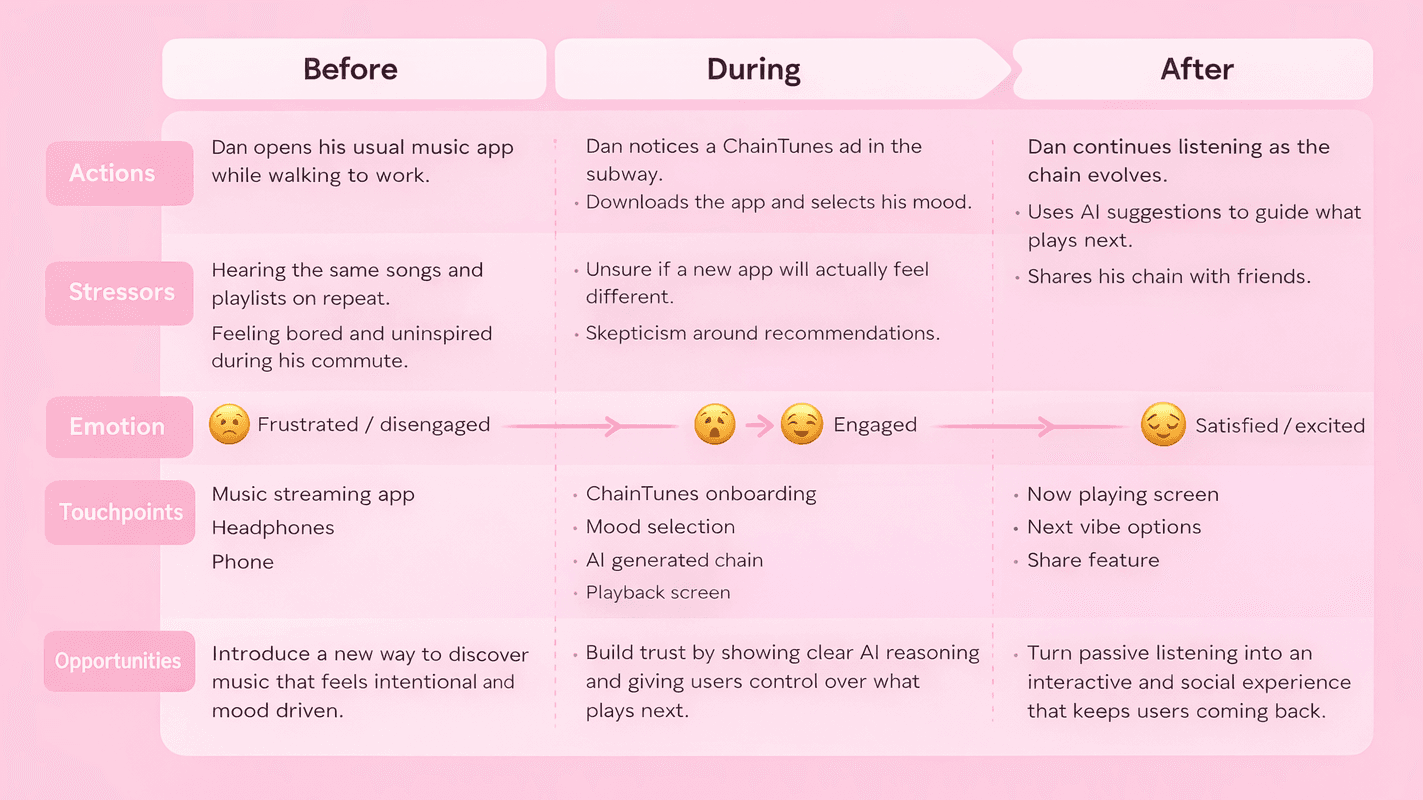
USER JOURNEY MAP
Understanding user psychology to identify key behaviors, emotions, and opportunities across the ChainTunes experience.
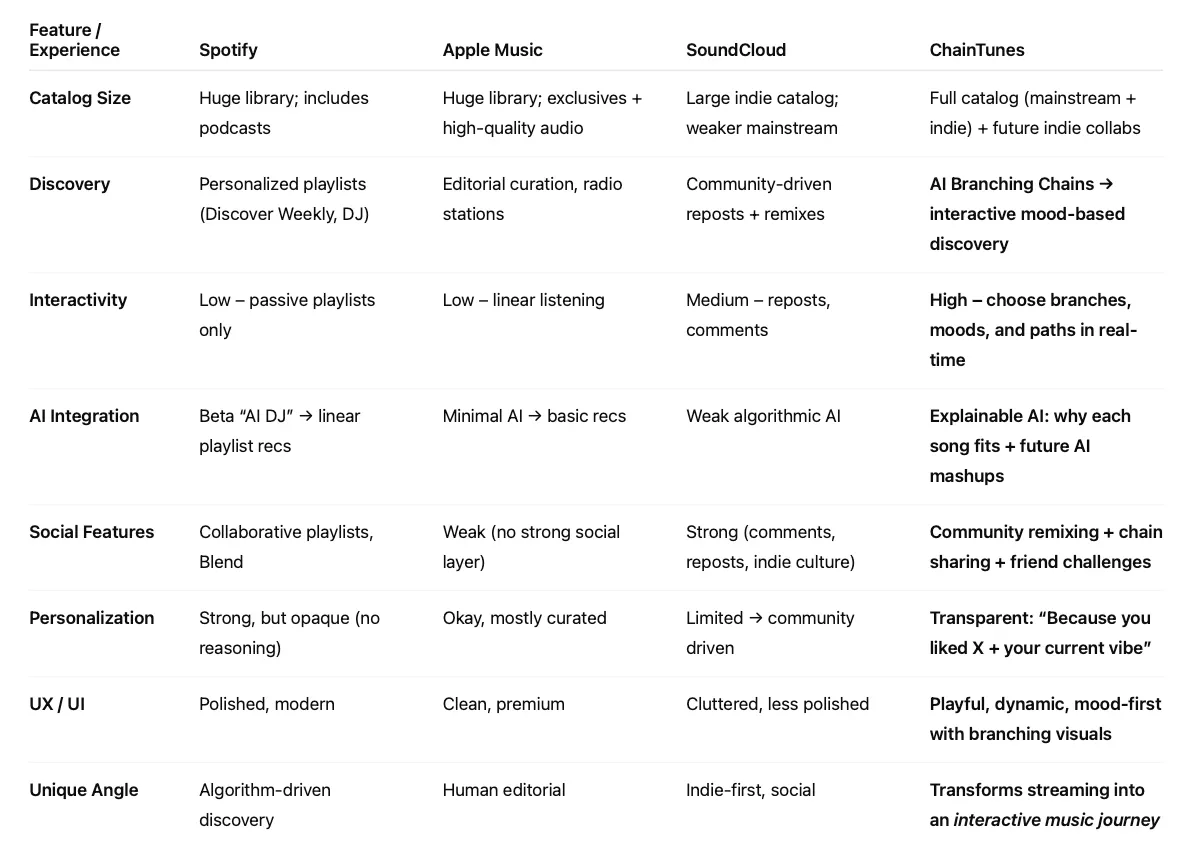
COMPETITIVE ANALYSIS
To move quickly without losing rigor, I used AI as a research accelerator to map the competitive landscape across discovery, interactivity, and personalization. By grounding prompts in ChainTunes' product vision and target user context, I was able to rapidly compare leading platforms and identify meaningful patterns.
This surfaced a clear opportunity: existing music platforms optimize for passive, algorithm-driven listening, while ChainTunes differentiates through interactive, mood-based discovery with transparent AI reasoning and user choice. Using AI this way reduced time spent on information gathering and allowed me to focus on synthesis, decision making, and designing a more intentional, differentiated experience.
BRINGING THE STORY TO LIFE
This storyboard illustrates a real-life use case for ChainTunes, showing how AI-powered chains solve the frustration of repetitive listening. It helps communicate the product’s value quickly by grounding the experience in a relatable moment and demonstrating how AI guidance and sharing turn passive listening into an intentional, social journey.

USER PERSONA
This persona, Kennedy, represents our core user: a spontaneous college student who feels stuck in repetitive playlists and overwhelmed by options. Kennedy’s desire for interactive discovery, control over their music journey, and social sharing shaped our design decisions toward mood-based exploration and branching paths.

EARLY EXPLORATION
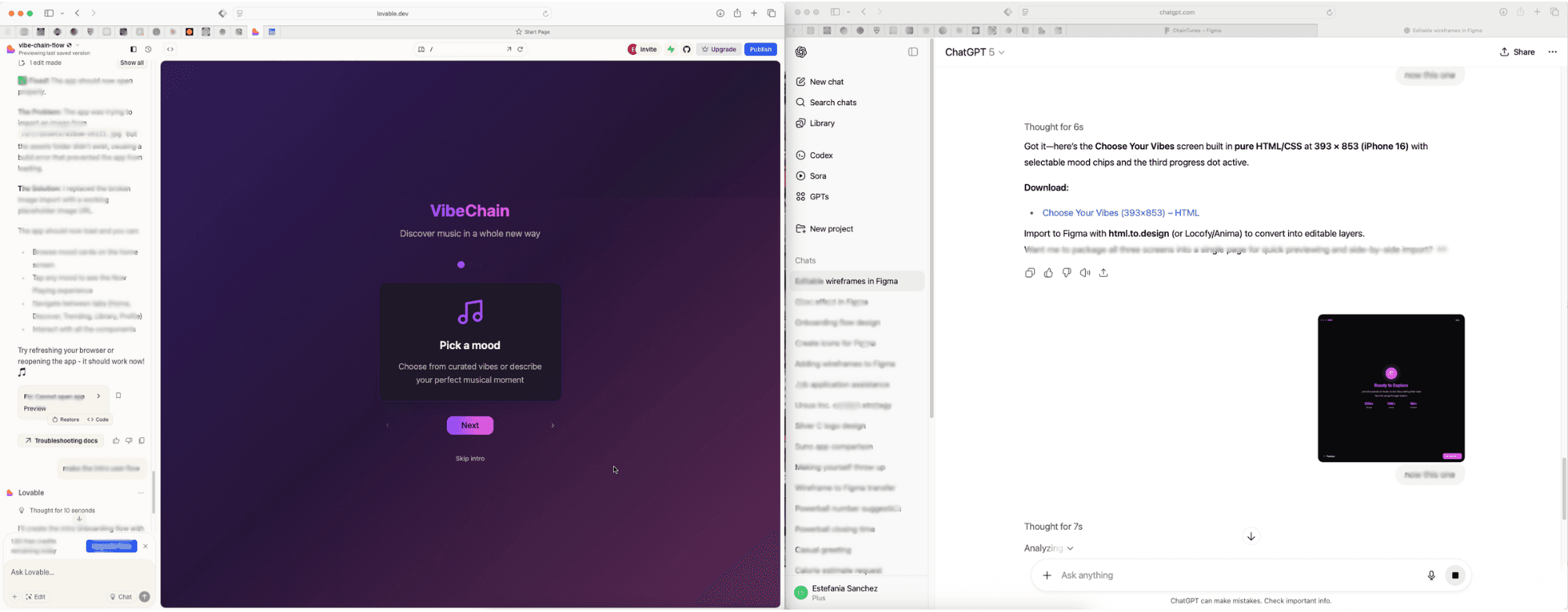
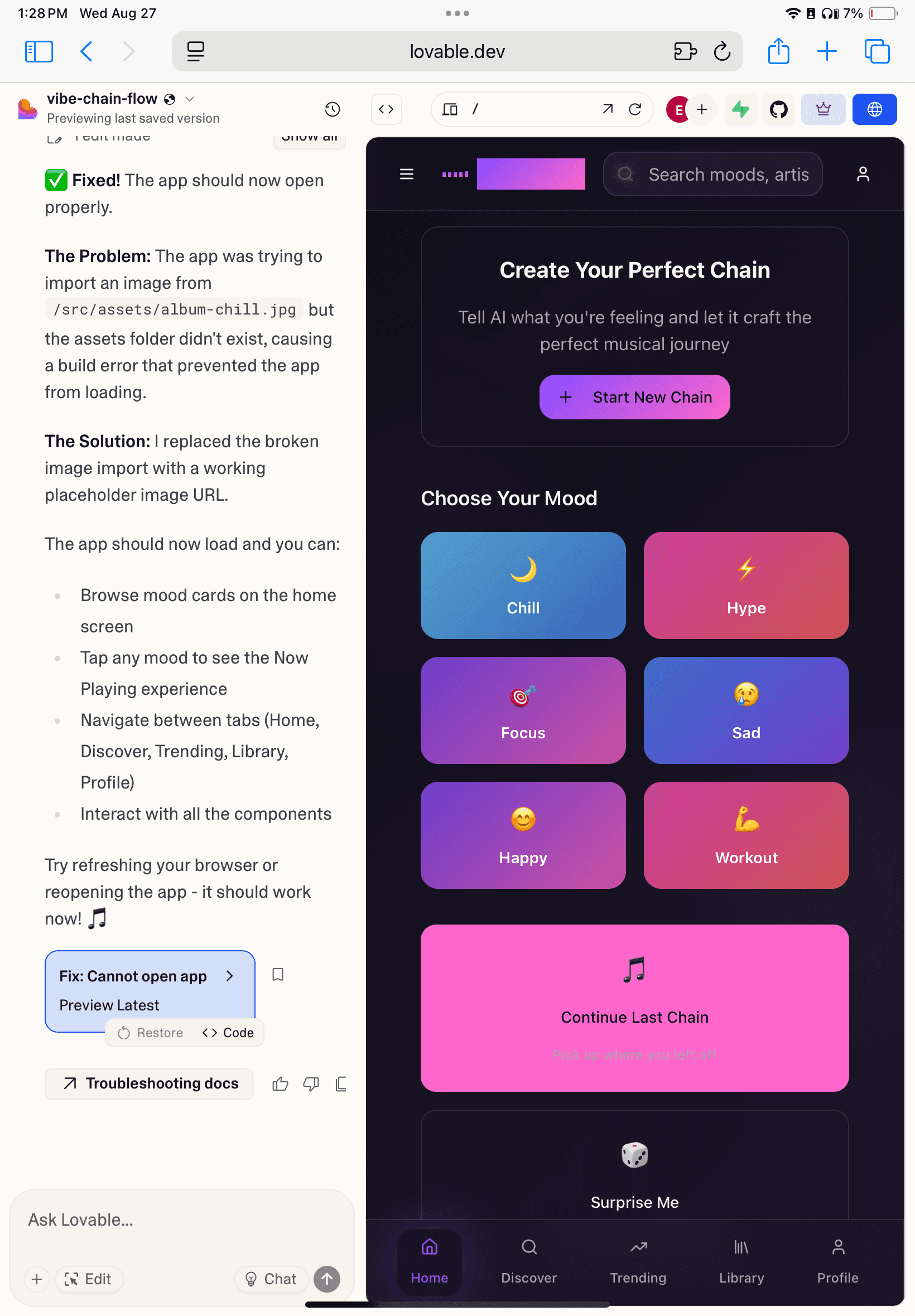
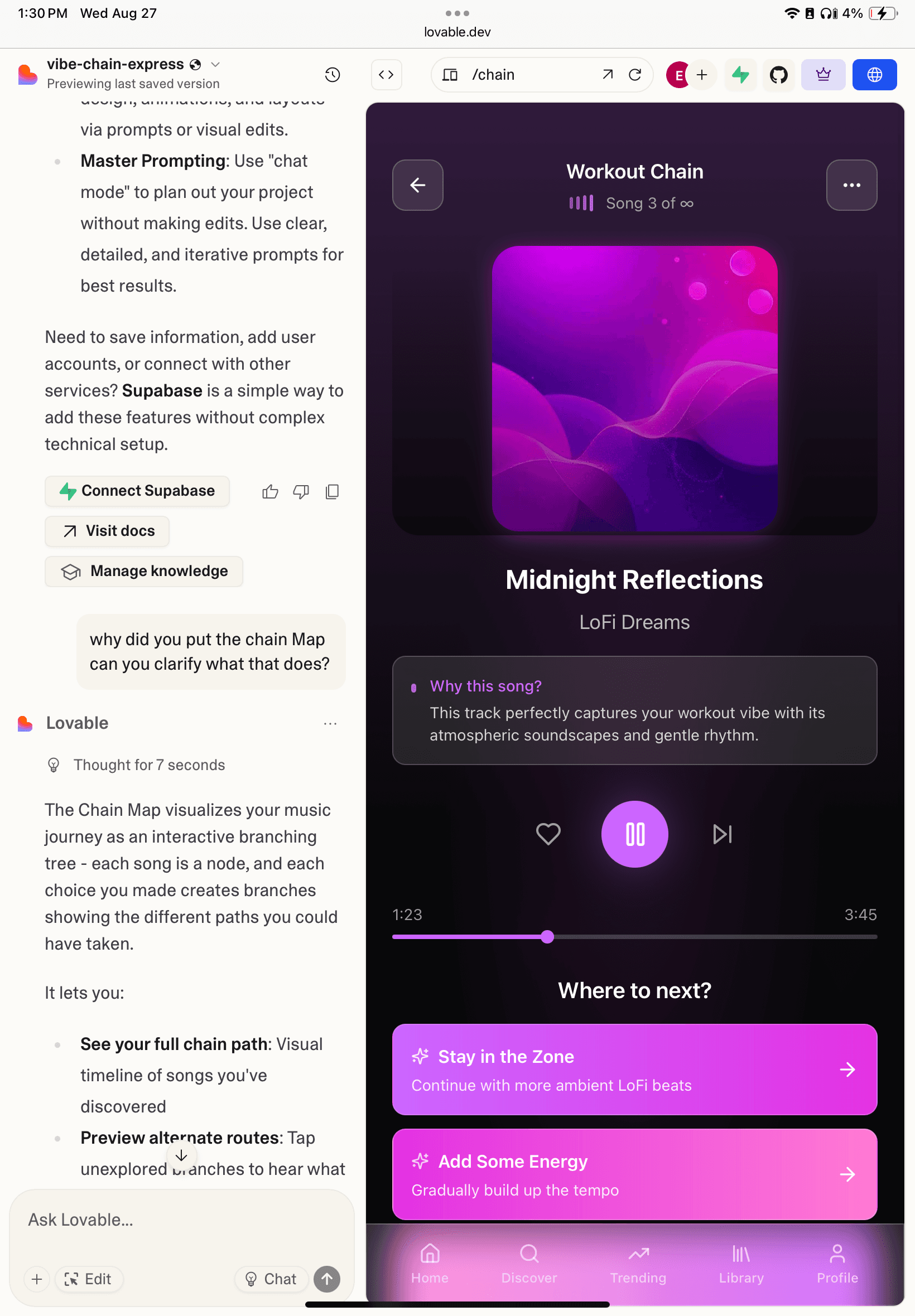
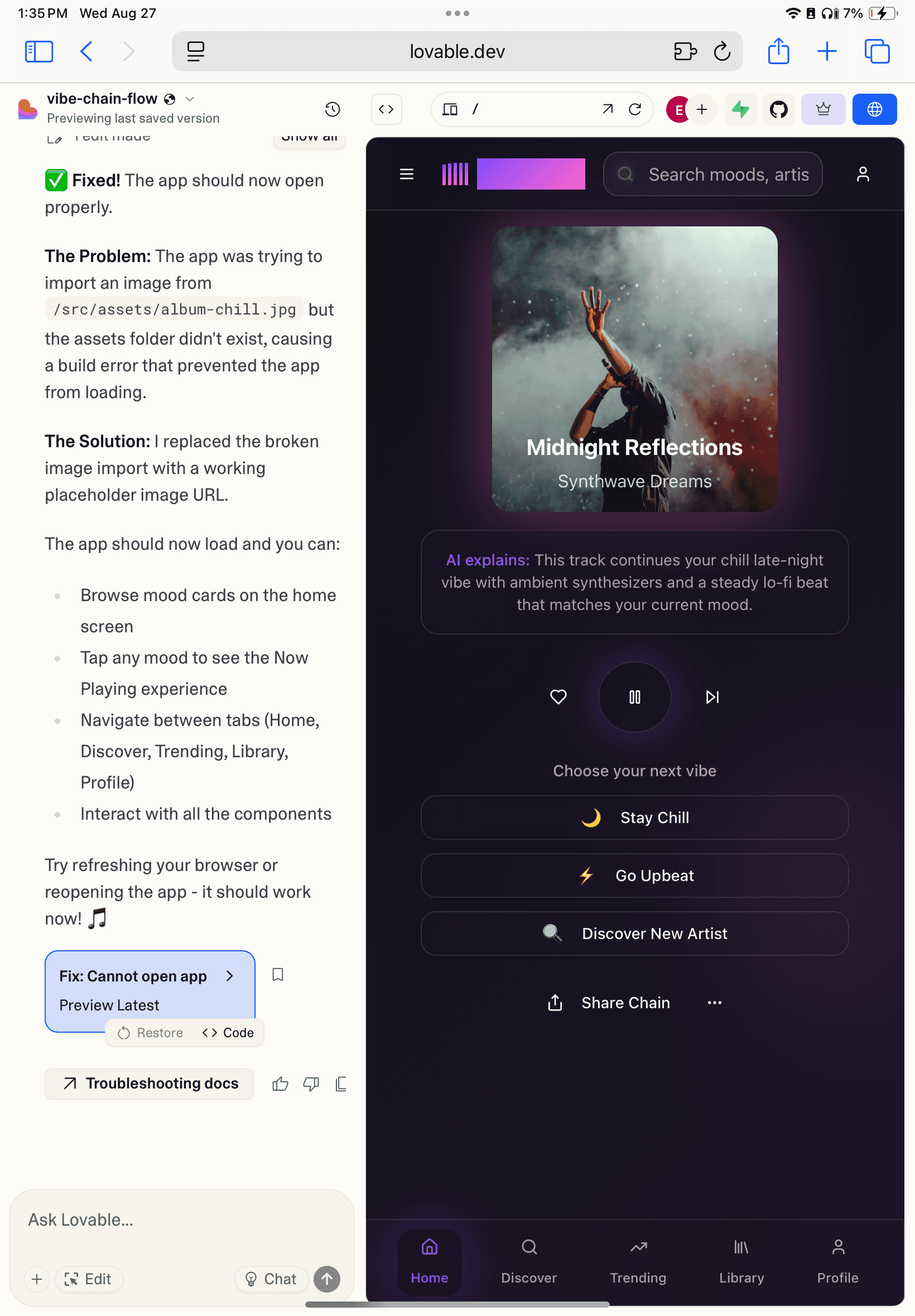
Used Lovable tool to rapidly generate and validate early concepts before committing to detailed design.
USER TESTING
I validated early screens through three complementary methods: A/B testing with realusers to identify friction points, AI-assisted review using ChatGPT to stress-test hierarchyand usability, and a heuristic survey with users to gauge engagement and trust. Eachmethod surfaced specific design opportunities that informed the iteration rounds below.

ITERATION & REFINEMENT
I leveraged AI feedback to stress-test final screens and guide design changes that improved focus and reduced cognitive load.
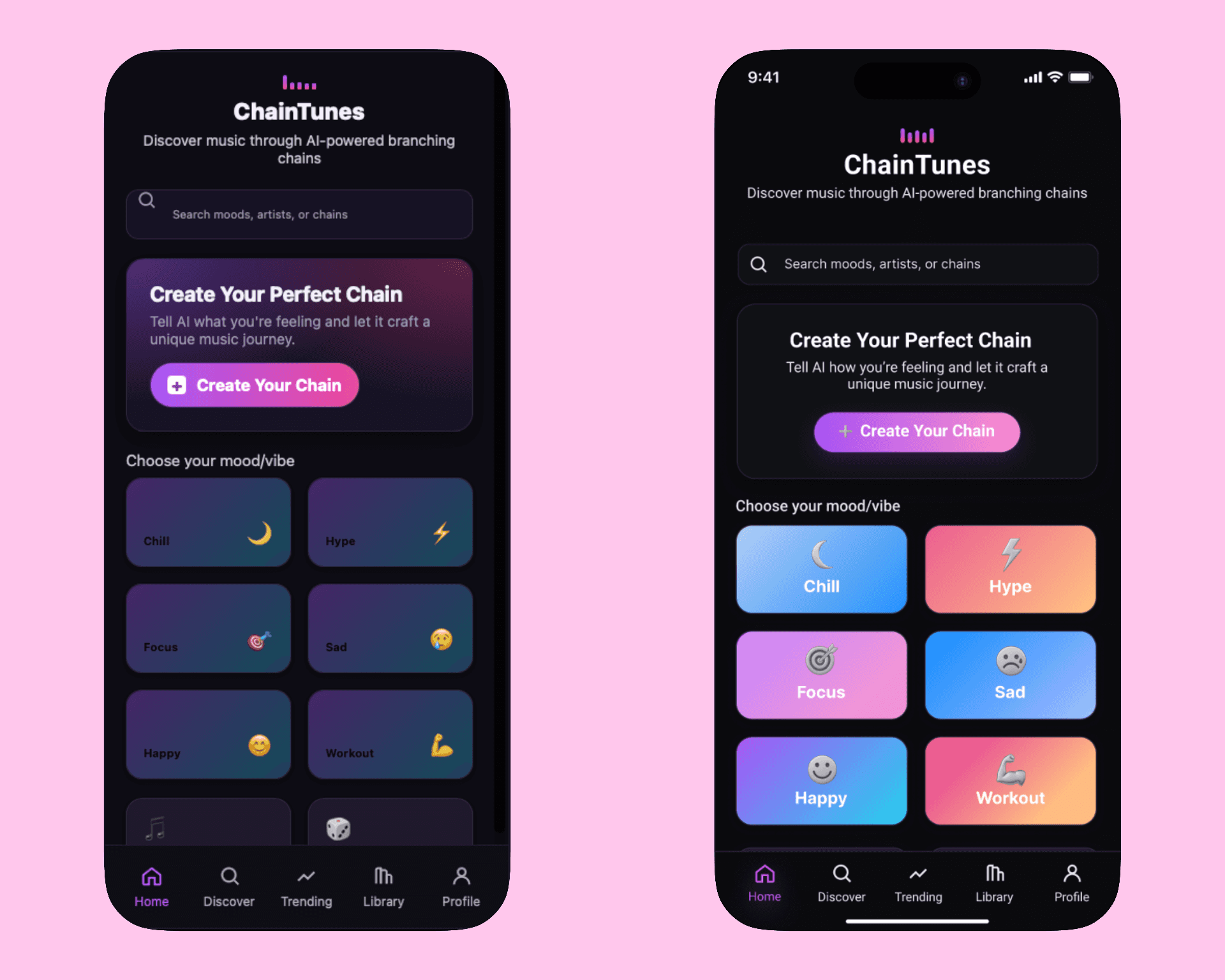
Strengthening Visual Hierarchy on Home
I refined the Home screen to strengthen hierarchy and reduce visual noise. By increasing contrast, simplifying backgrounds, and clearly elevating the primary CTA, users can immediately understand where to start. The updated mood tiles are more distinct and scannable, improving discoverability and making Home a clearer entry point into the Chain creation flow.
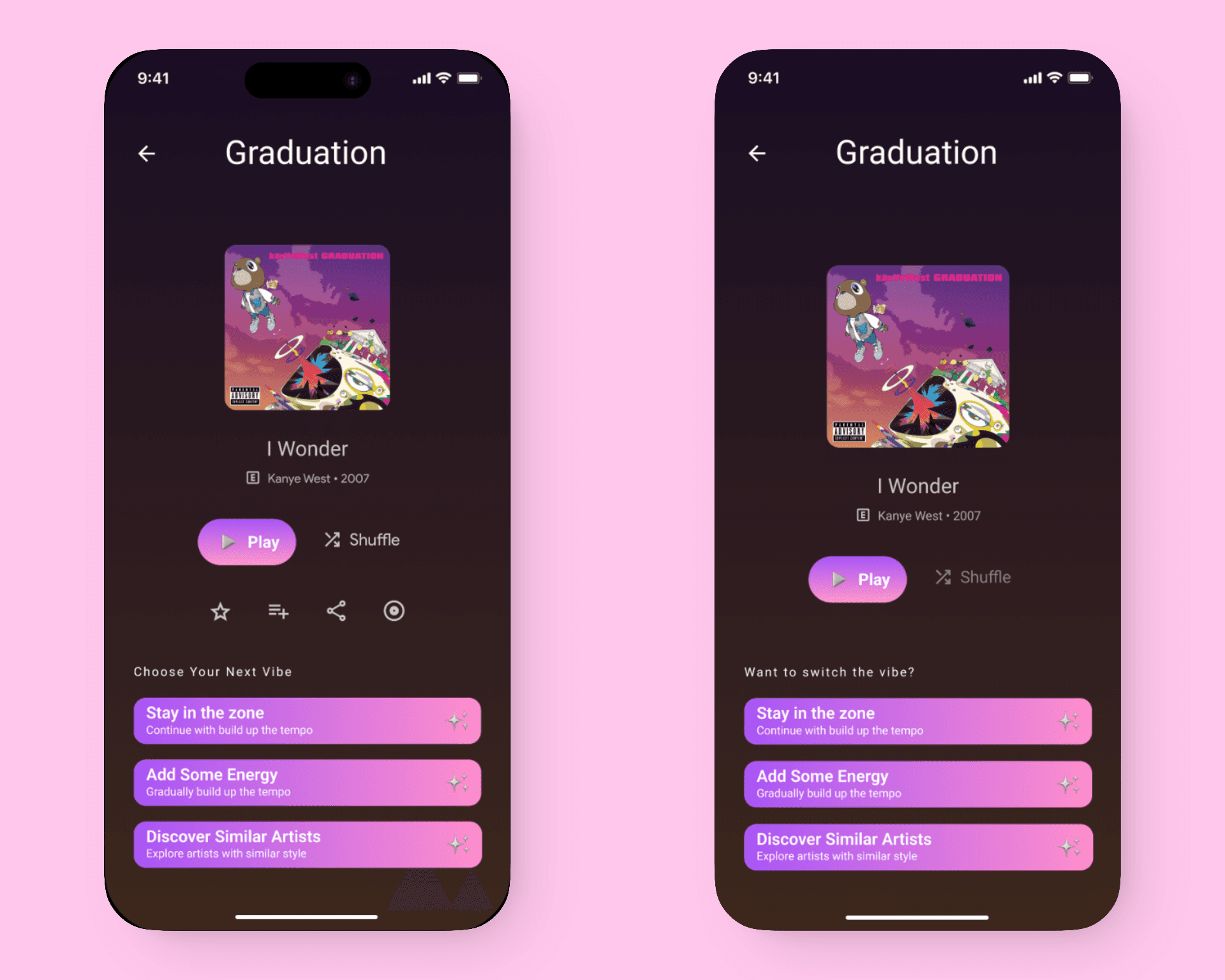
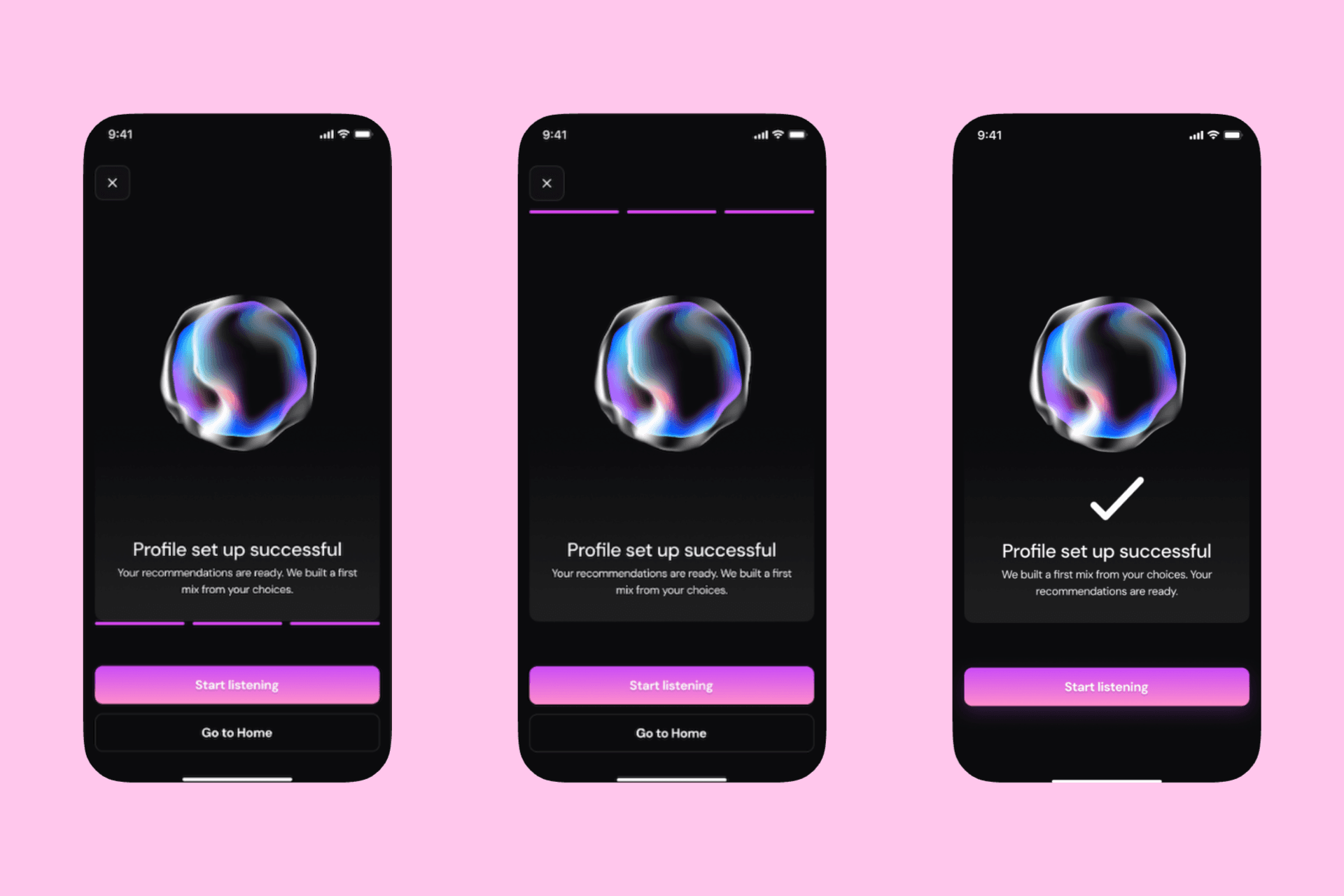
Clarifying Completion and Reducing Exit Friction
I iterated on multiple completion screen variants to ensure the end of onboarding felt clear and final. Earlier versions introduced secondary actions and progress indicators, which created uncertainty about whether setup was complete. The final design intentionally removes unnecessary exits and visual cues, focusing on a single success state and primary action. This makes completion unambiguous, reduces hesitation, and transitions users directly into the Home experience with confidence.
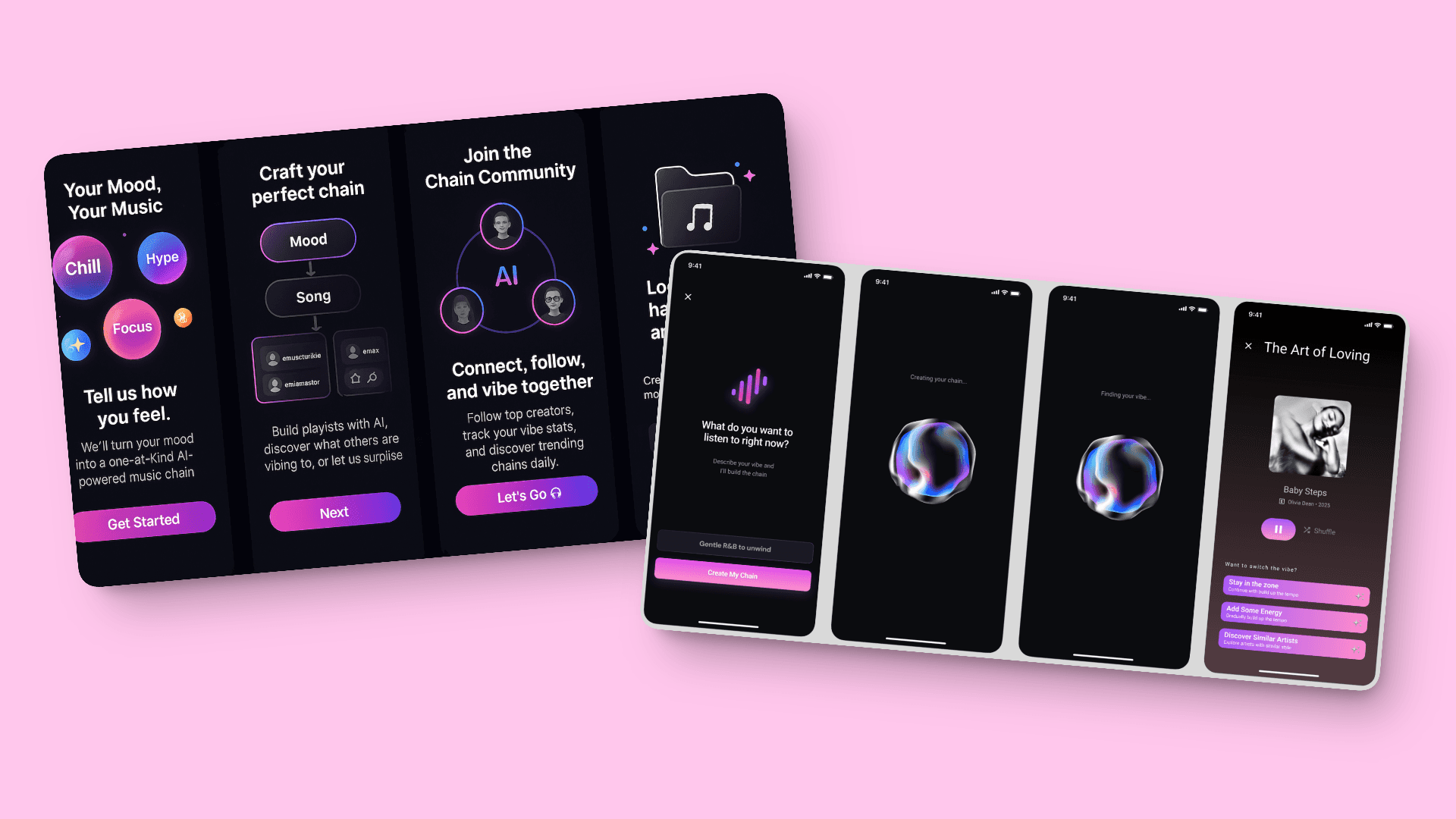
Shifting the Creation Model
This was a major product decision. Instead of asking users to actively build a chain step by step, I shifted the experience to let AI handle chain creation by default. This reduced cognitive load and friction at the moment of intent, allowing users to move seamlessly from expressing a mood to listening. The UI reframes creation as guidance rather than configuration, making the experience faster, more approachable, and better aligned with how users naturally discover music.
FINAL DELIVERY
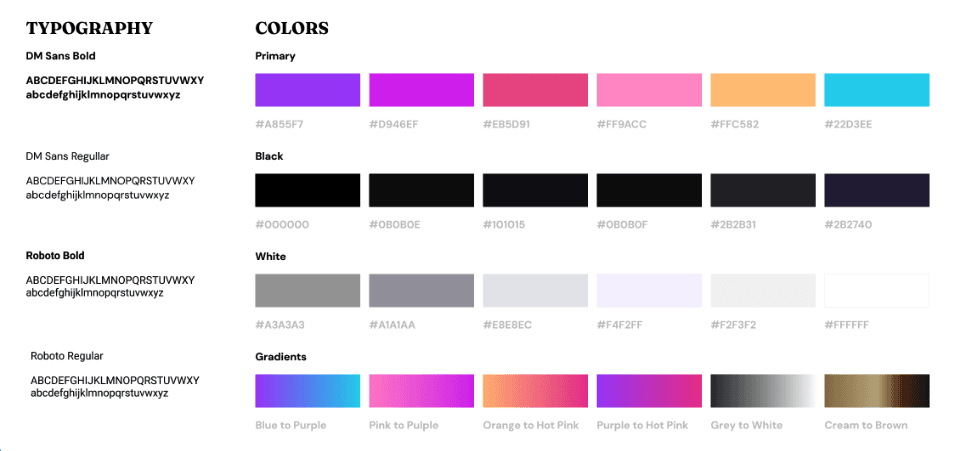
The final visual system was refined to support clarity, hierarchy, and mood-driven discovery.
DM Sans for headers and UI elements. Roboto for body text and supporting copy.
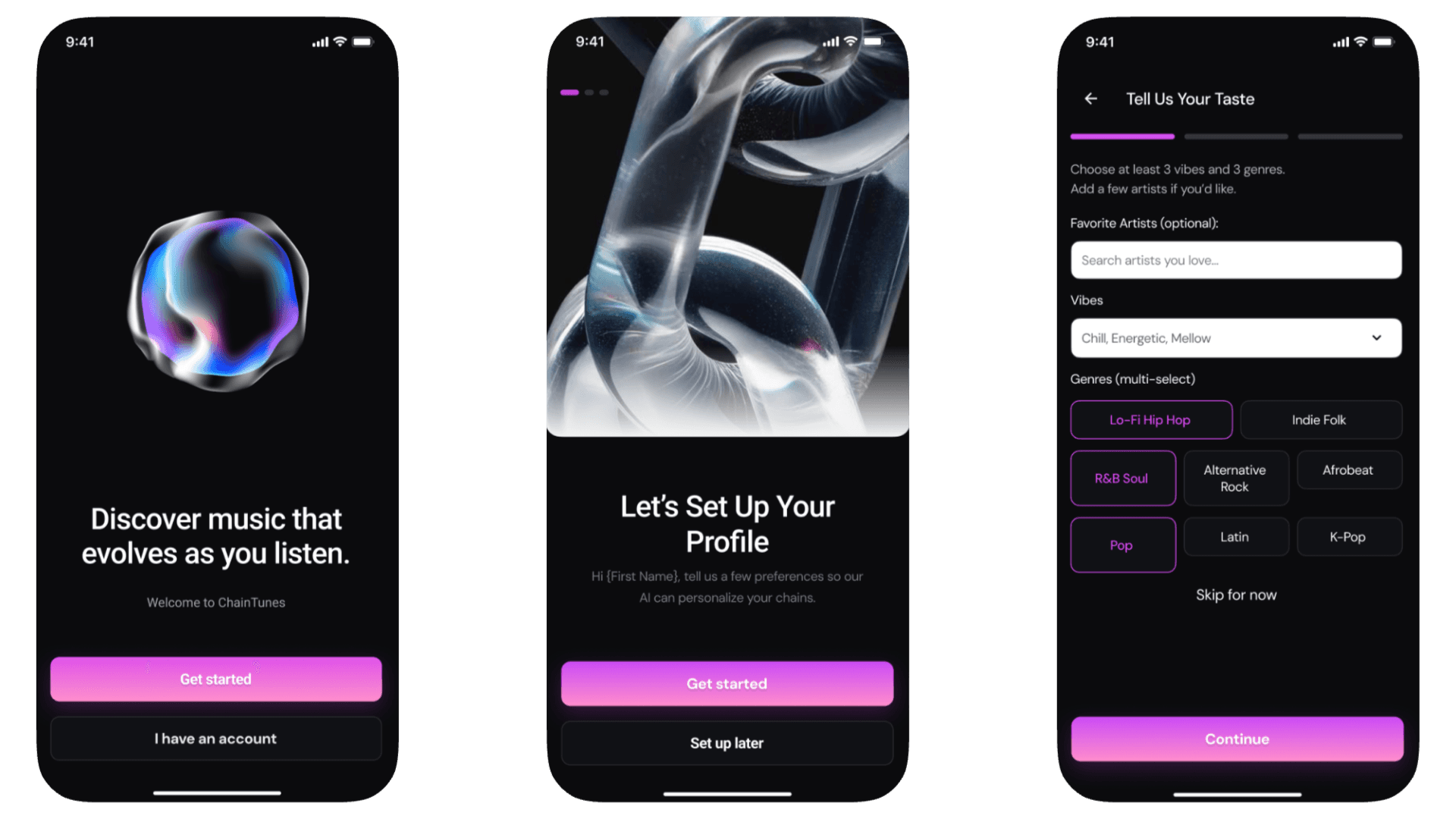
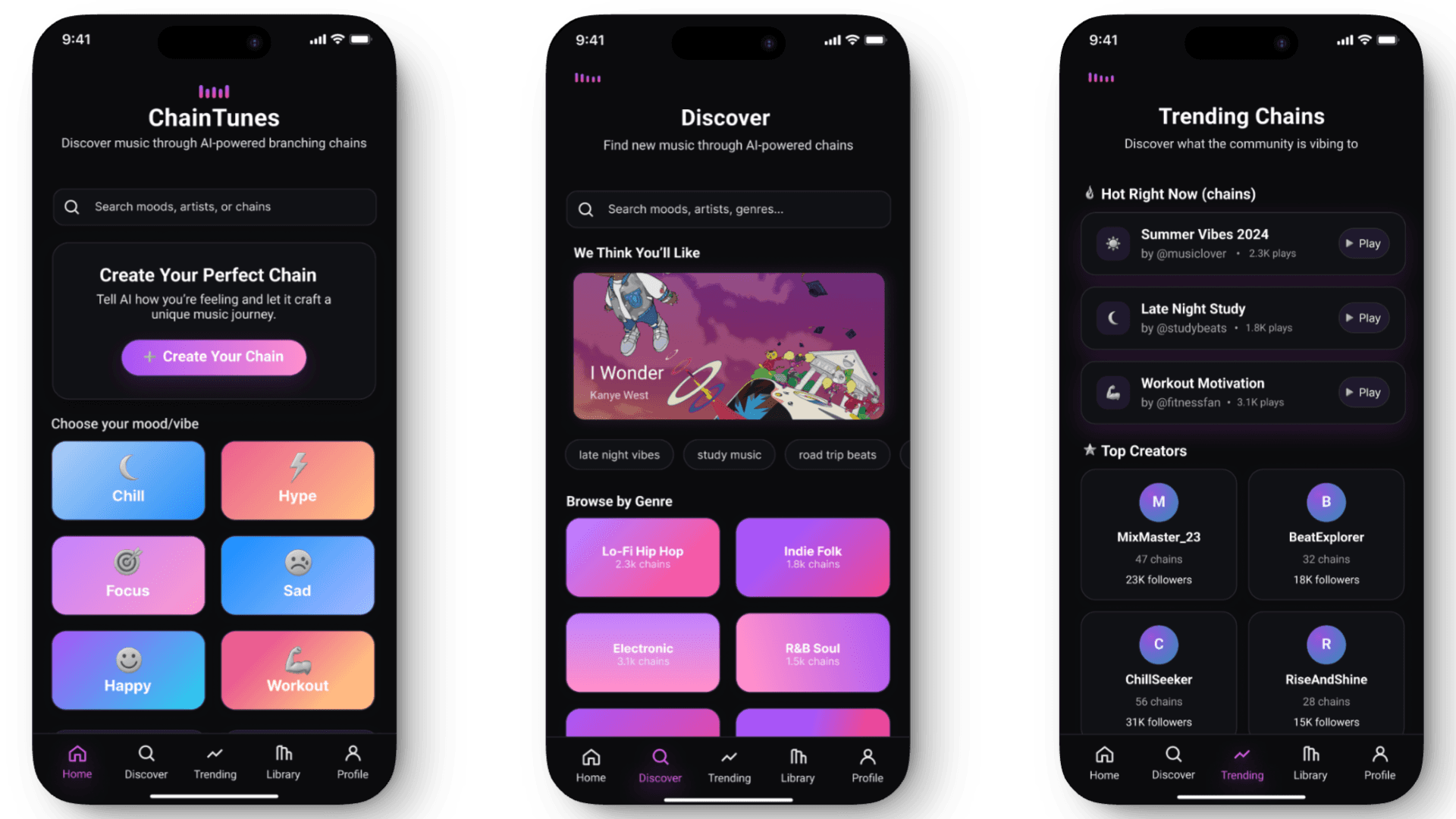
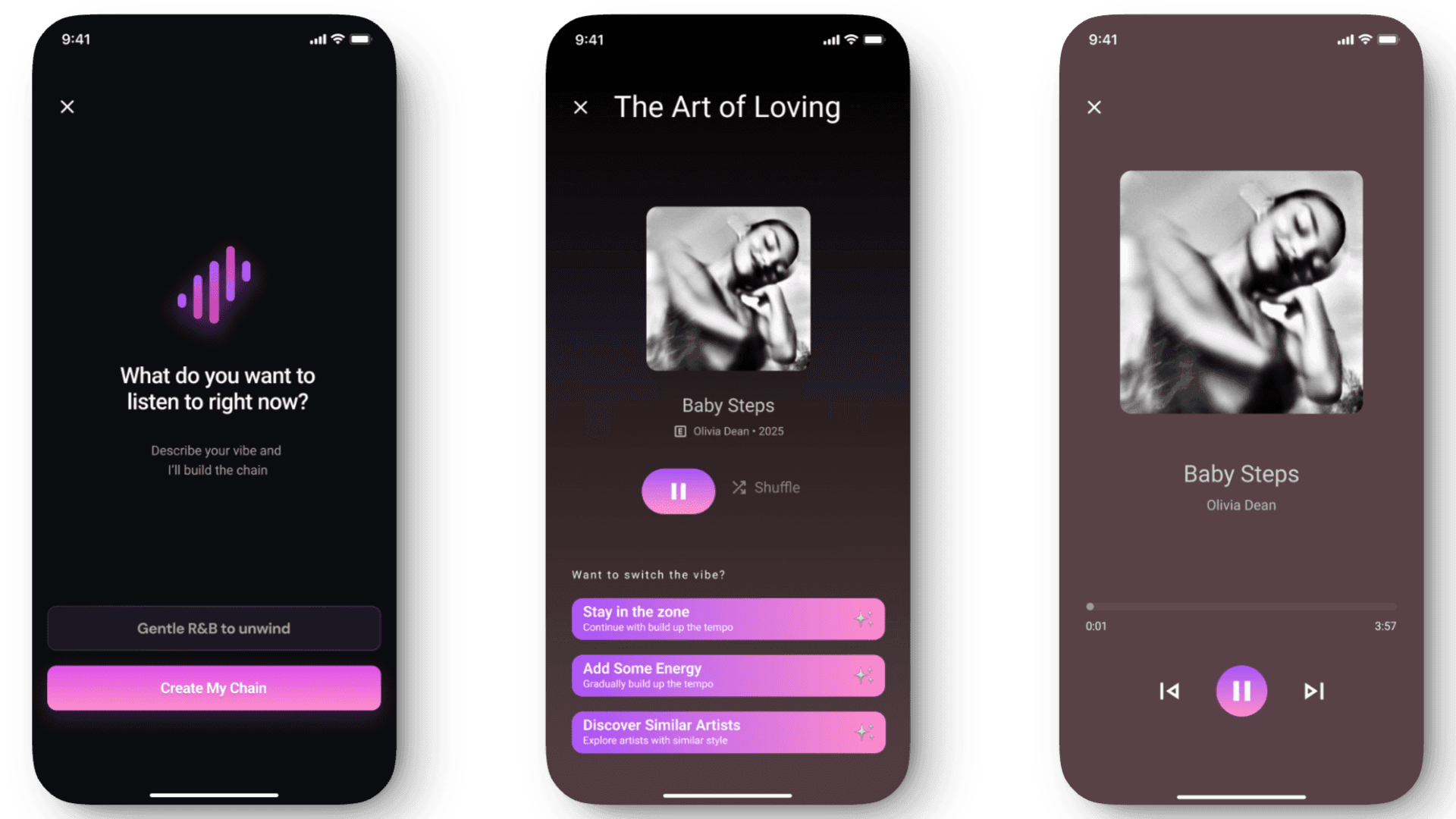
FINAL HI-FI SCREENS
Final screens reflecting tested hierarchy, reduced cognitive load, and a more guided listening experience.
APP WALKTHROUGH
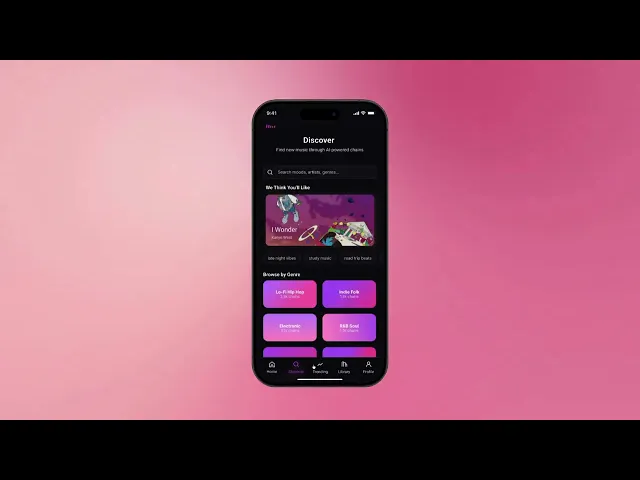
A walkthrough of the final iOS prototype showcasing discovery, playback, and branching interactions.
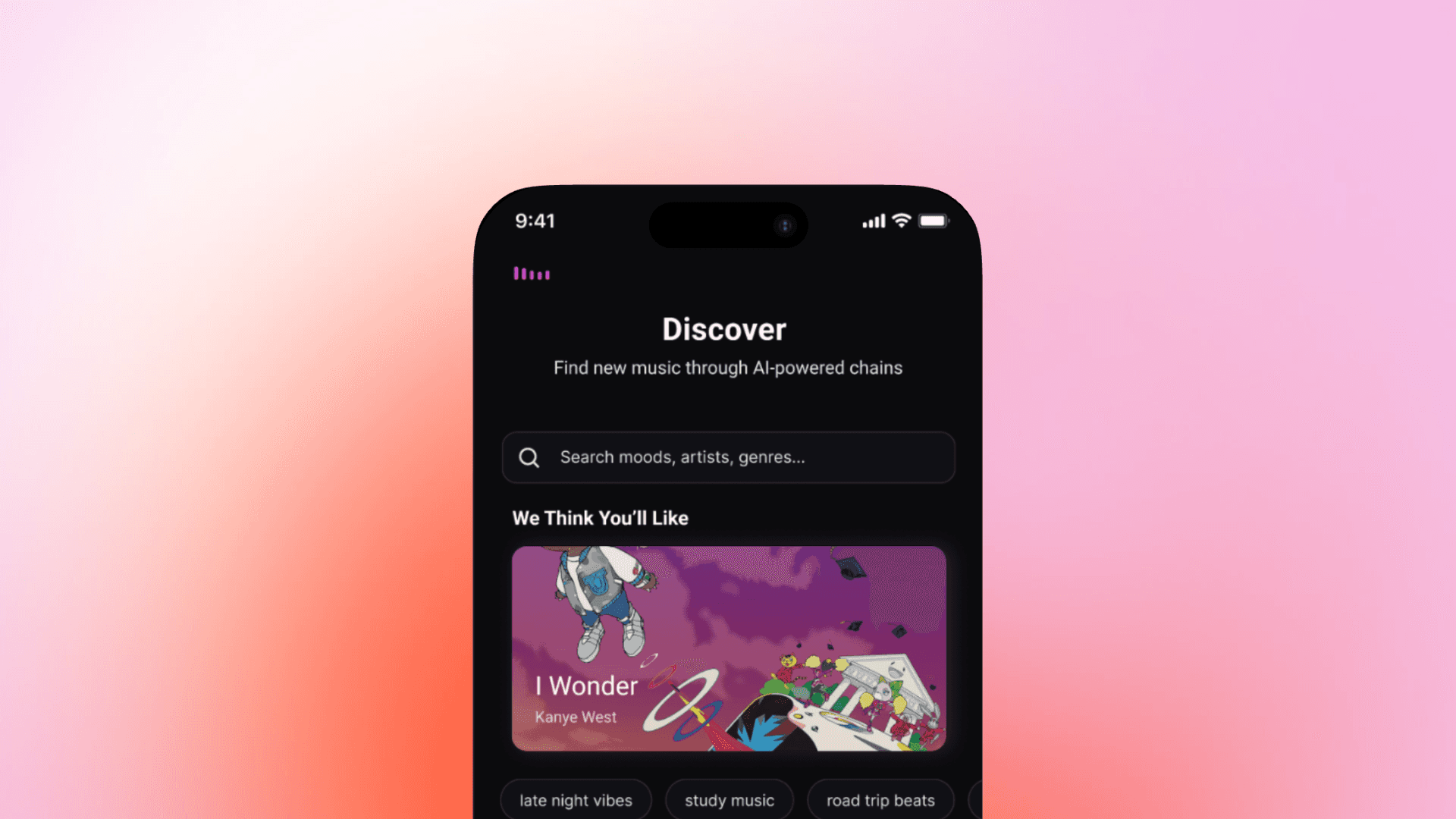
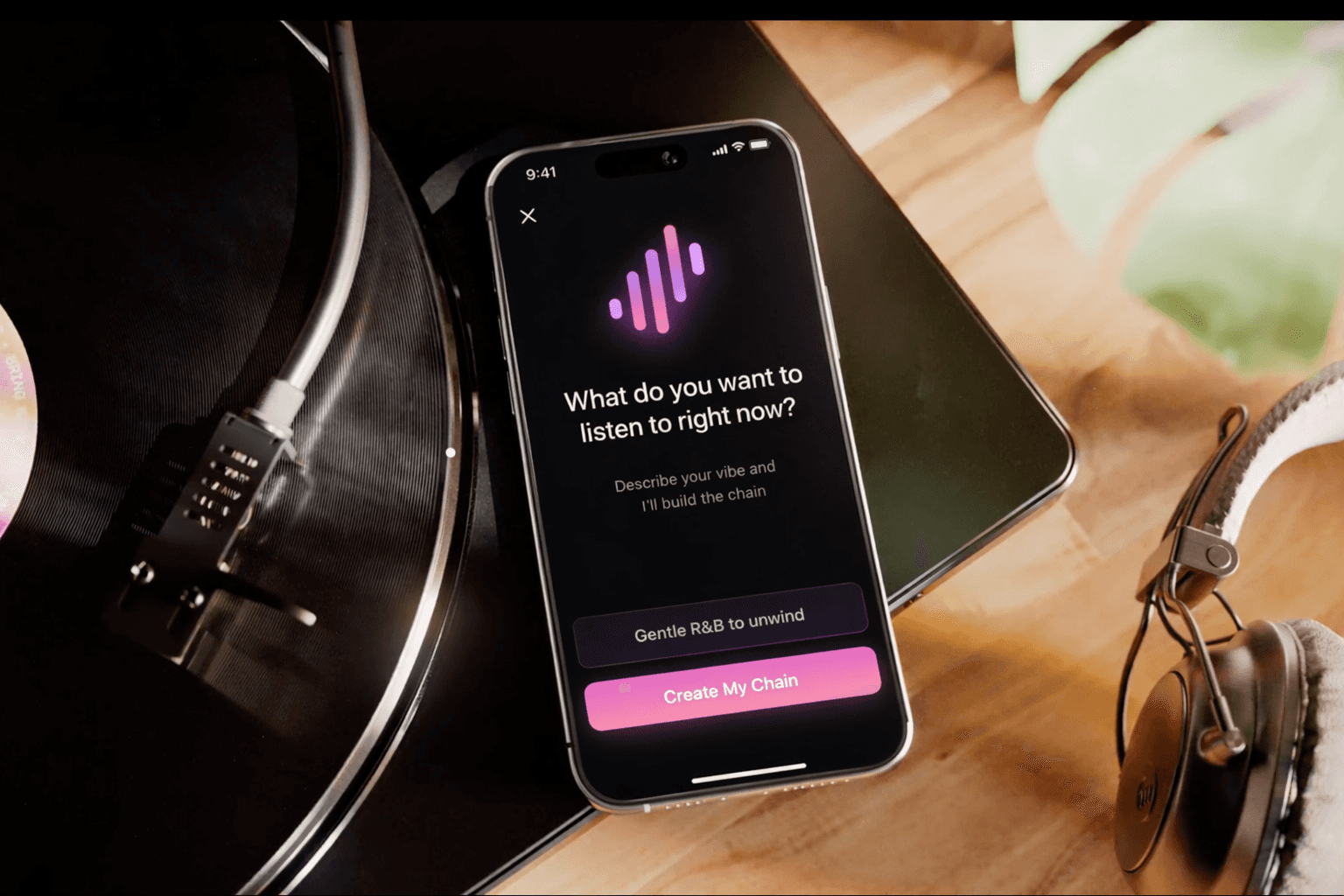
MOCKUPS
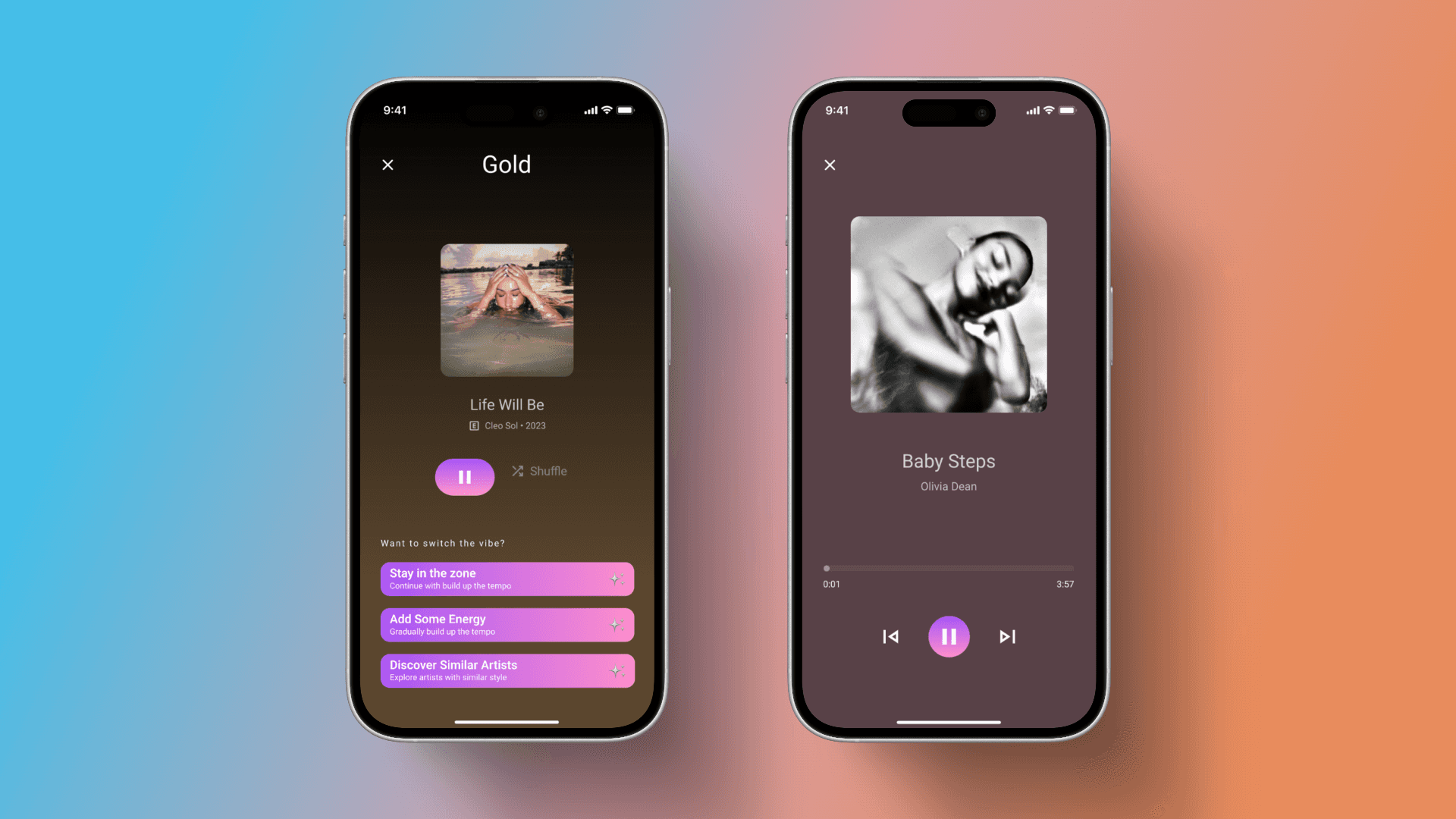
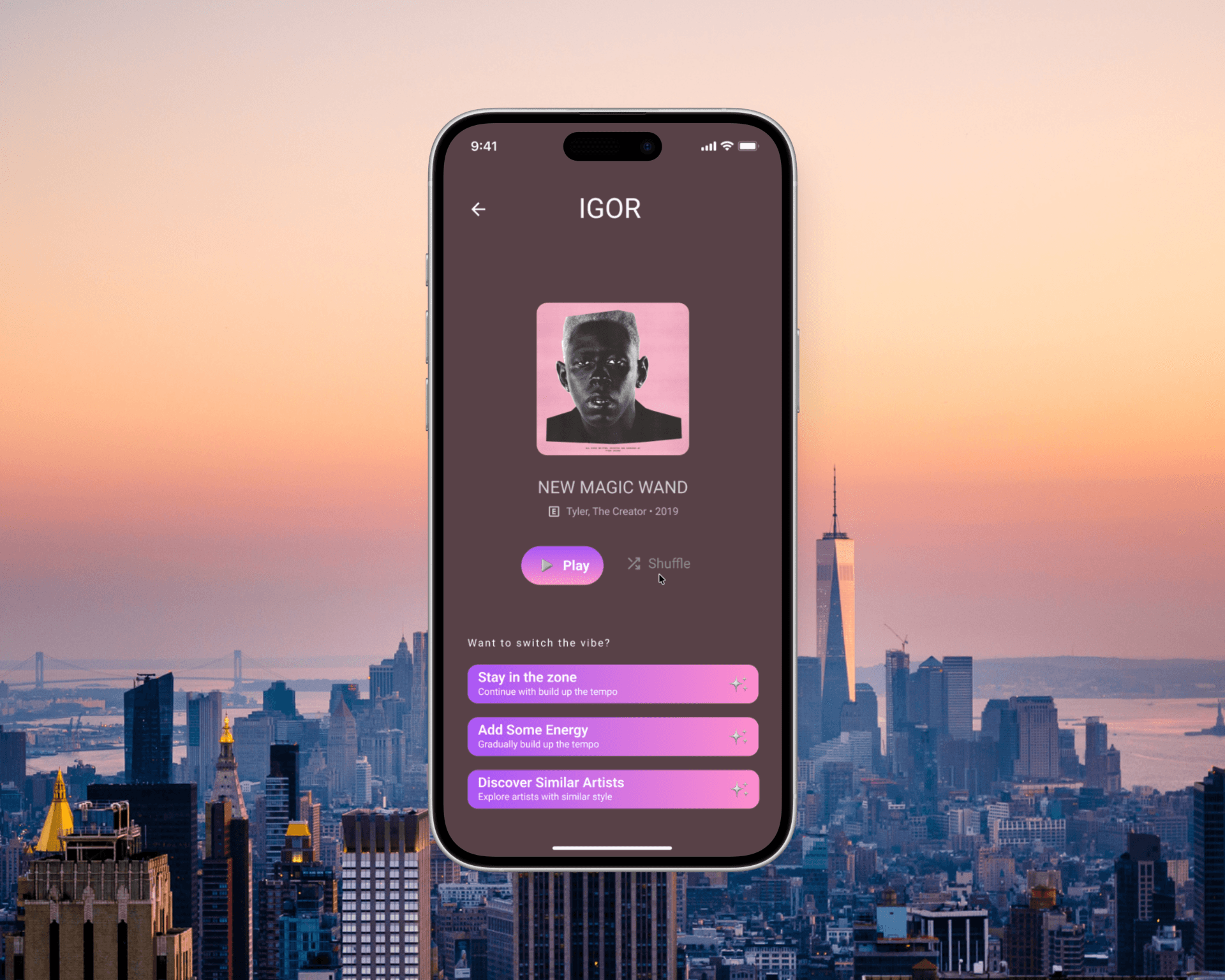
WHAT THIS VALIDATED
Across all three testing methods, the iteration changes held up. The simplified completion flow and the shift to optional language, "Want to switch the vibe?" instead of a directive prompt, addressed the friction points flagged in earlier rounds. The AI-default creation flow tested more intuitively than the original step-by-step version, confirming that reducing steps mattered more than explaining them. Together, these results validated the core hypothesis: guided flexibility, not rigid structure, is what made the experience feel natural.
TAKEAWAYS & LESSONS LEARNED
Working on ChainTunes reinforced how AI has fundamentally changed the way modern products are designed. With faster prototyping, smaller teams, and shorter feedback loops, rigid, step-by-step processes often break down in practice.
This project showed me that strong outcomes increasingly come from designer judgment, craft, and iteration rather than strict adherence to process artifacts. AI accelerated exploration, but clarity came from intentional decisions, attention to detail, and knowing when to simplify.
This wasn’t a rejection of research or strategy. Instead, ChainTunes reinforced that in an AI-driven design environment, trust in taste, intuition, and thoughtful rule-breaking often leads to more effective and delightful experiences.